Residency Rules
As in, it ruled but also: guidelines

Writing residencies are a major consideration for writers like me. There’s the popular residencies like the McCormack Writing Center’s (formerly Tin House), Sewanee’s Writing Workshop, Kenyon’s Writer’s Workshop; these residencies typically match writers with faculty who will also be at the residency. It’s a workshop style, meant to give you intimate feedback on a project with a trusted coach (faculty) and teammates (others in your group). Last summer I was waitlisted for McCormack’s workshop and did not end up making it off the waitlist; a month ago I got waitlisted at Kenyon for this summer. These kinds of residencies are wonderfully fruitful because they expand your writing community and sometimes allow you to meet literary agents/other important figures in the publishing zeitgeist.
Last year, after querying my memoir and getting close to landing an agent, I began to spiral. All of my hard work in researching the book and writing it seemed to come to nothing; full manuscript requests went nowhere. I’d won a major literary prize for a piece of that memoir, and still I felt stuck. Stalled. Going nowhere. In that molasses I applied for a different kind of writing residency, one that focused less on workshopping and more on creating, generating. I felt a primal need for time, space, and quiet to work on something other than my memoir; with an even stronger desire I craved for this time without anyone else reading my pages. I wasn’t ready to workshop this new project.
Based on my friend Kate’s positive experience at Dorland Mountain Arts, I applied for their residency program, dreaming about writing in the cottages pictured on the website that were tucked in the hills of Temecula.
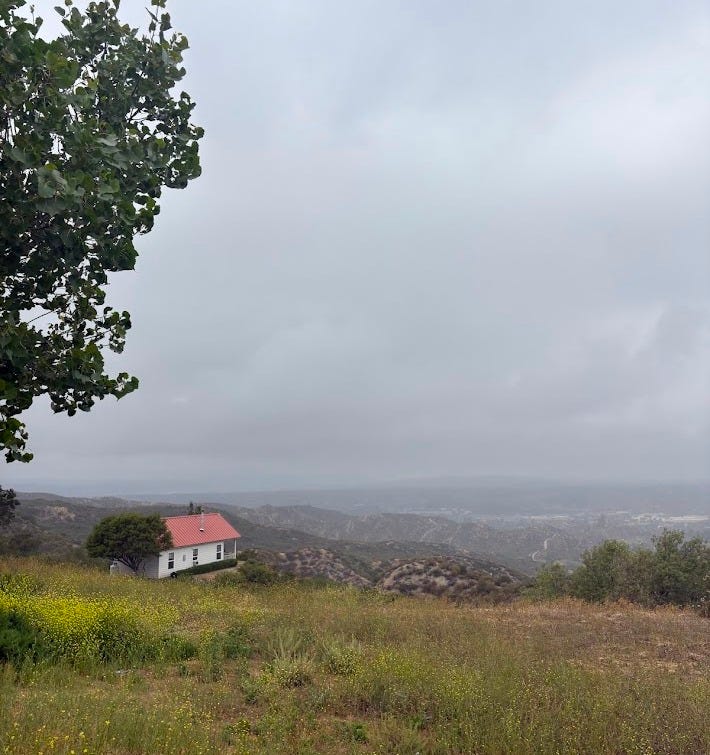
When I got my acceptance, I was in the beginning stages of starting a novel. It came from the buried bones of a short story I’d written in 2019 that I still sometimes thought about. Other than a few sentences, there wasn’t much I found worthy of carrying over to the new project, but it was enough to get me started. It was slow, especially at first. I had underestimated how difficult the transition from writing nonfiction to fiction would be (in fact, this should probably be its own post at some point); I hated feeling like a newborn deer when I came to the page, wobbly on my legs, incapable of standing up fully.
And since then I’ve been writing. I hit 20K words and scheduled my week at Dorland. My legs, although shaking, were supporting me.
It’s impossible for me to describe the transcendent quiet at Dorland. I heard the wind, in all of its different pitches, for the first time in ages. It was so quiet I could hear the small black lizards outside moving toward one another in the grass. Sometimes I’d lose track of time watching a small family of rabbits munching on leaves. My cottage had a perfect view of early May sunsets, which I watched in stunned silence like a person receiving communion. I made myself a fire in the wood stove almost every day and wrote in its warmth.
When you’re spending a week in a space alone, routines emerge quickly. By day three I’d developed a kind of schedule that I’d stick with the rest of the time. It looked something like this:
6:30-7AM: Wake up, mosey about, do a big stretch outside and say something aloud (and insane) to myself like ‘my book needs me and I need my book’
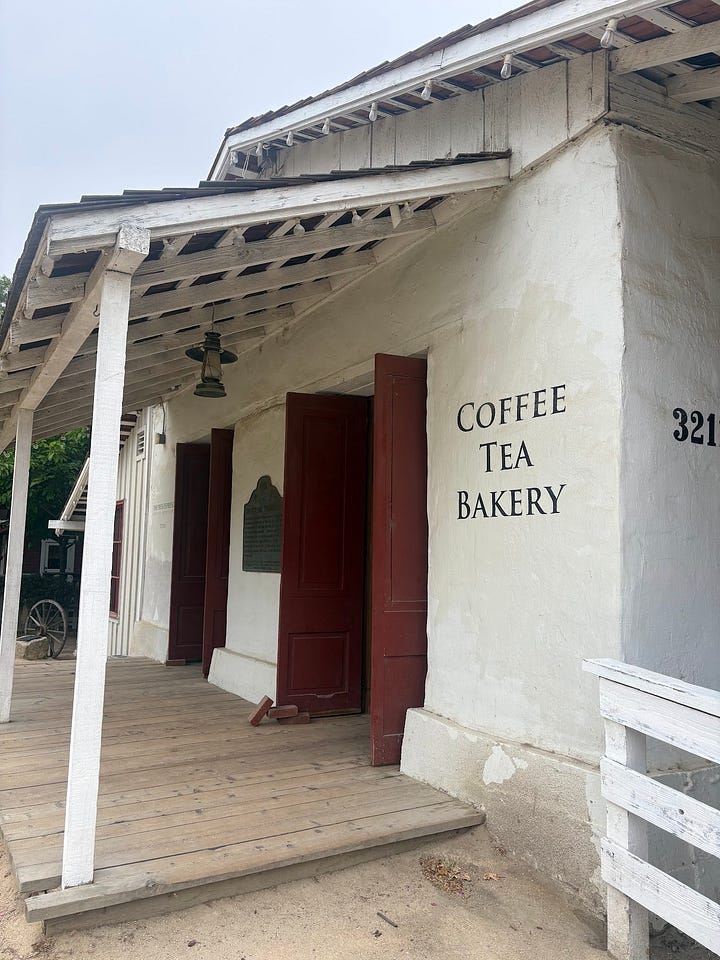
7-7:30AM: Drive 10 minutes to Press Espresso for a large oat milk latte with an extra shot. I loved Dorland because while it felt remote and far away from civilization, it was actually only a 10 minute drive to Ralph’s. I also made friends with a barista on day two and it was such a nice routine to see her every morning before opening my computer
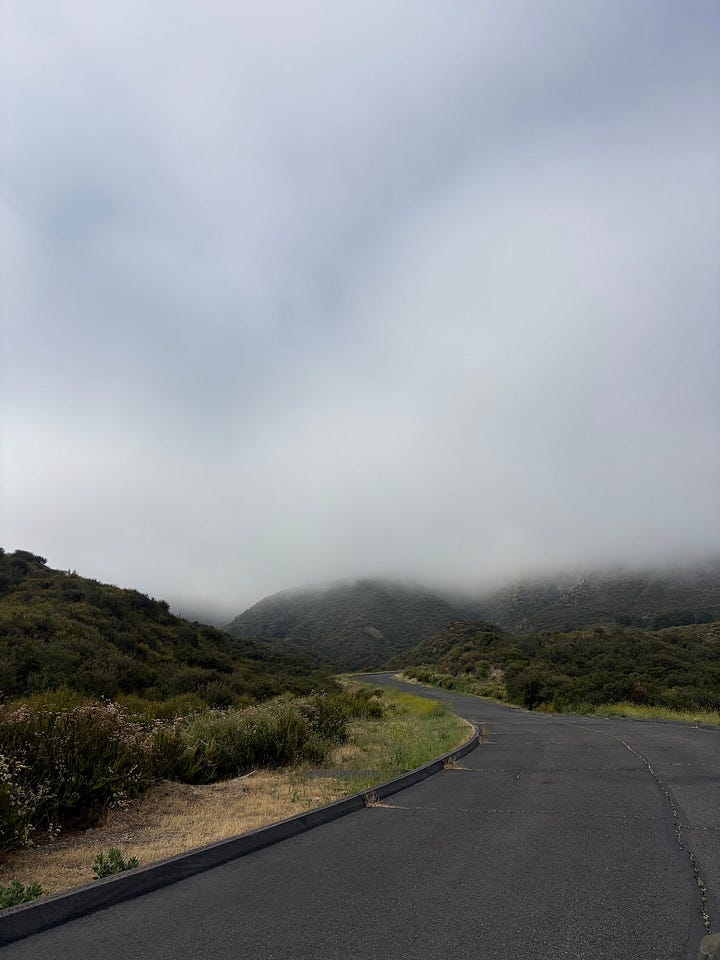
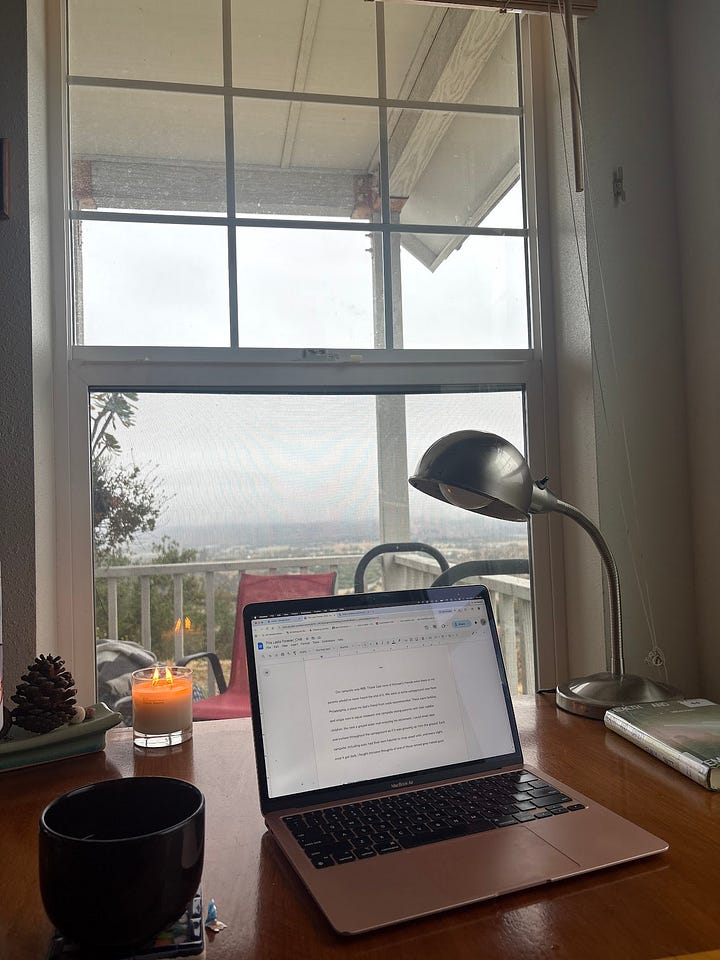
morning clouds on my drive to coffee 8-11AM: Write. Now, was this nonstop consistent writing for 3 hours? No! Sometimes I’d sit for a half hour and write, sometimes for ten minutes before I’d stand, aimlessly, and walk around the cottage. Or I’d walk outside for a few minutes and come back. Sometimes sentences would pour out easily, like I’d turned on a faucet, and the time would pass quickly. Other times they’d be reluctant and dry; it could take me an entire hour just to write a paragraph. I tried letting my big chunks of writing time be exactly what they needed to be, which was different each time
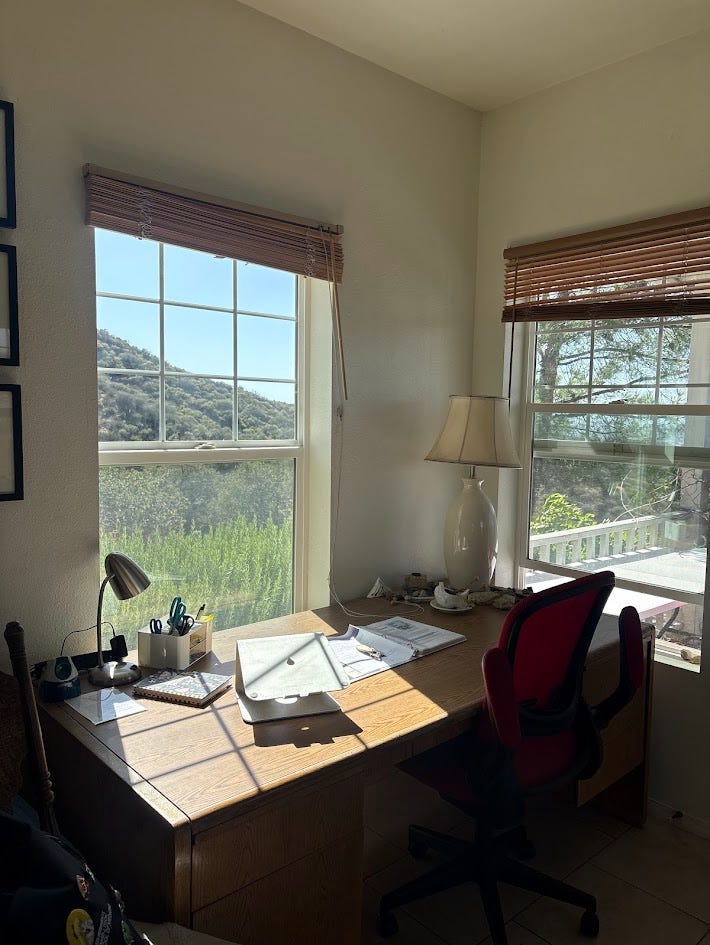
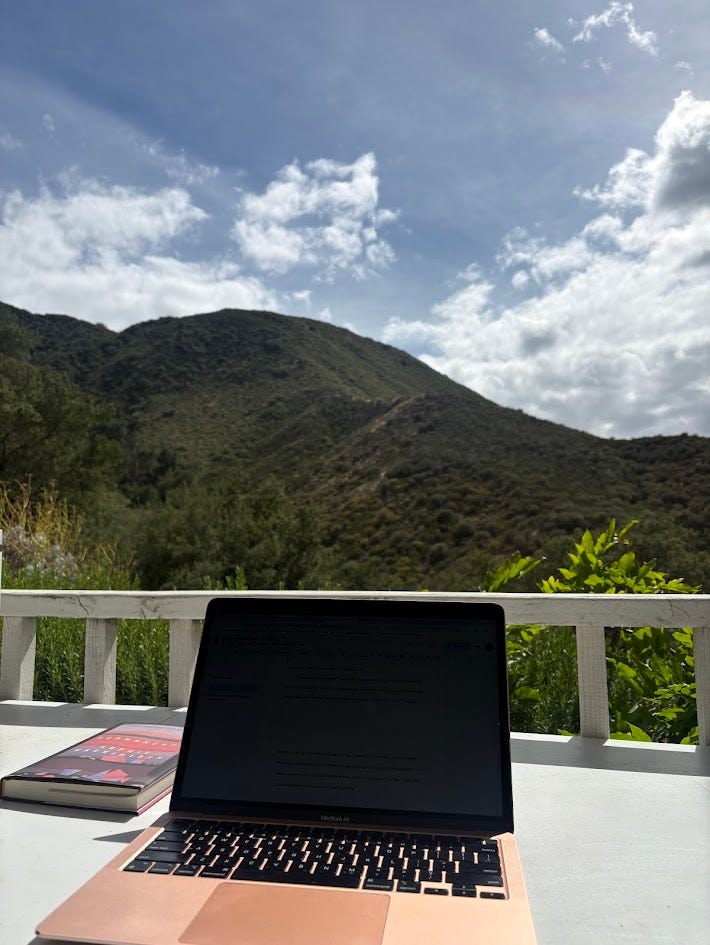
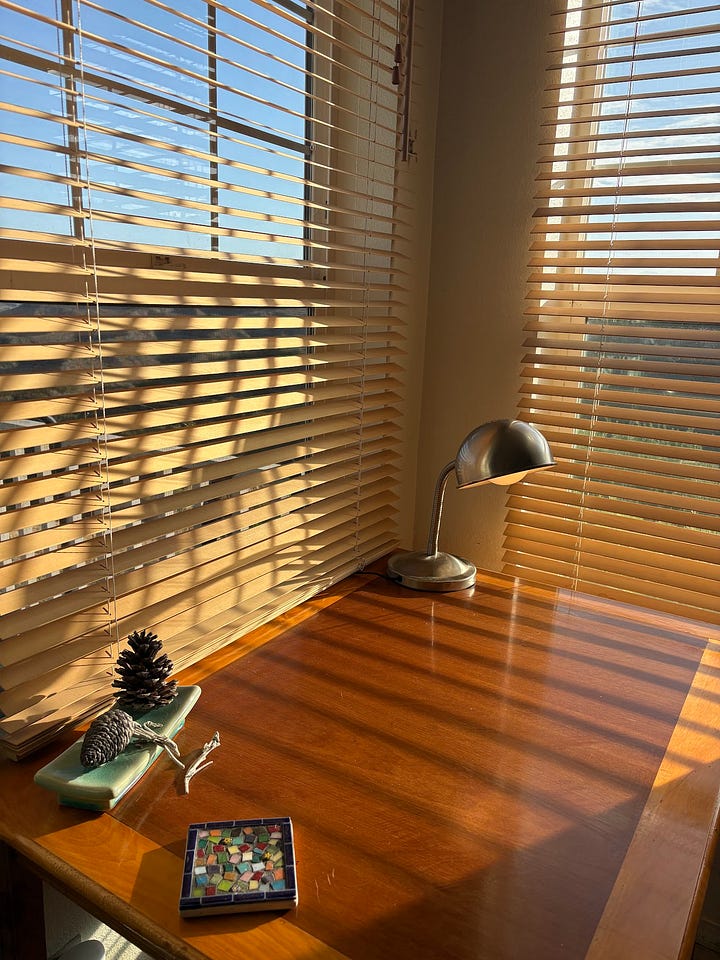
writing views 11AM-1PM: Lunch/Hike. More about eating habits later, but when I say lunch here what I mean is like… a slice of peanut butter toast or like a handful of honey roasted peanuts or easy mac lol. Dorland has over 300 acres on their property, and I’d either walk a full hike (like Far Spring trail) or I’d just walk the immediate surroundings, taking in the lily pond or views of the surrounding hills
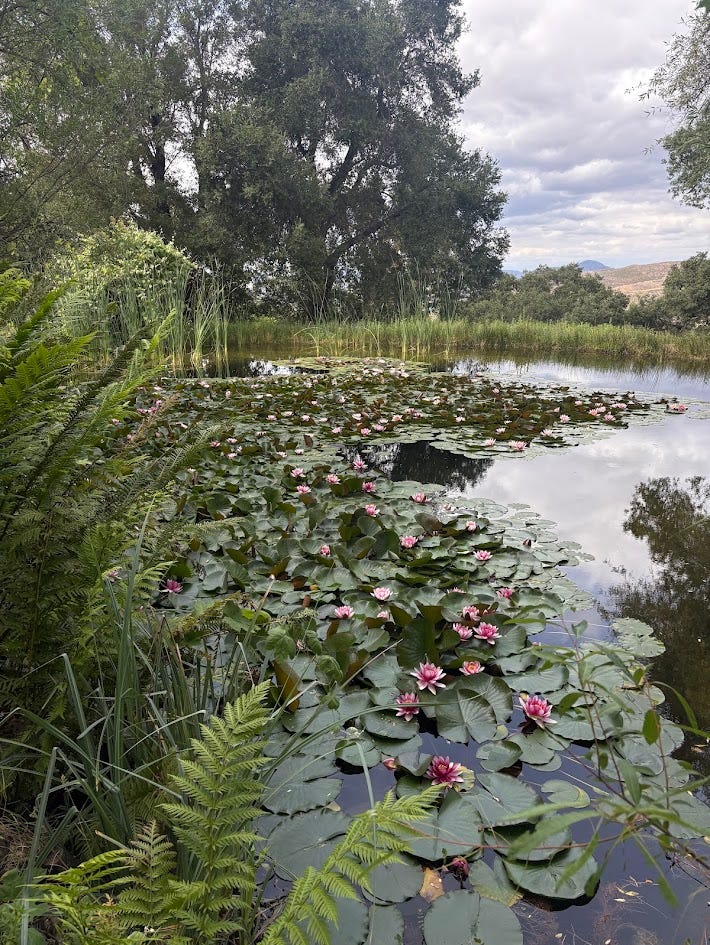
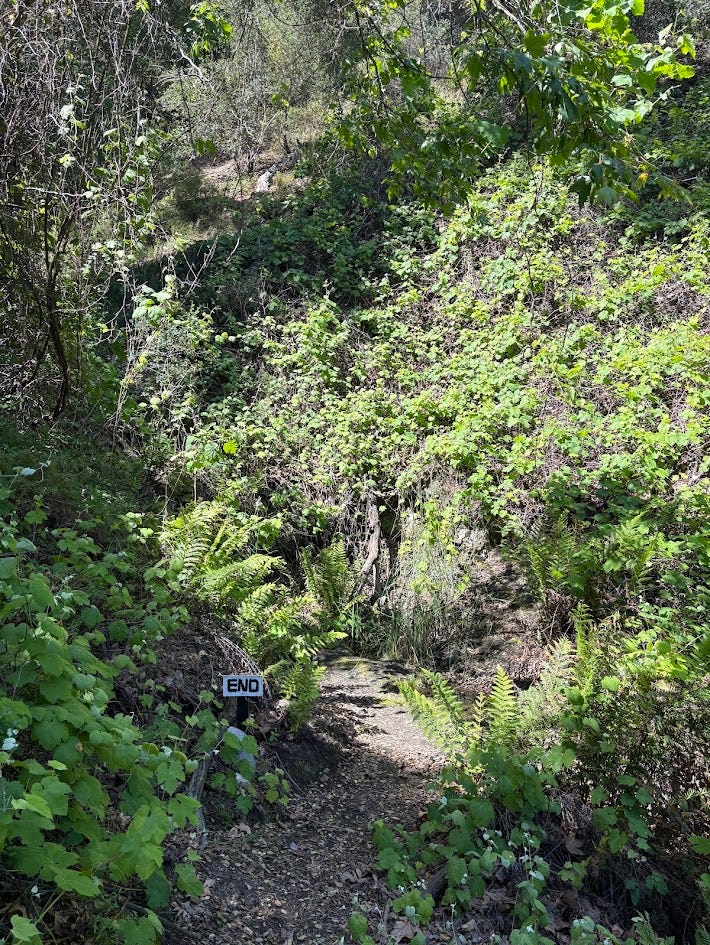
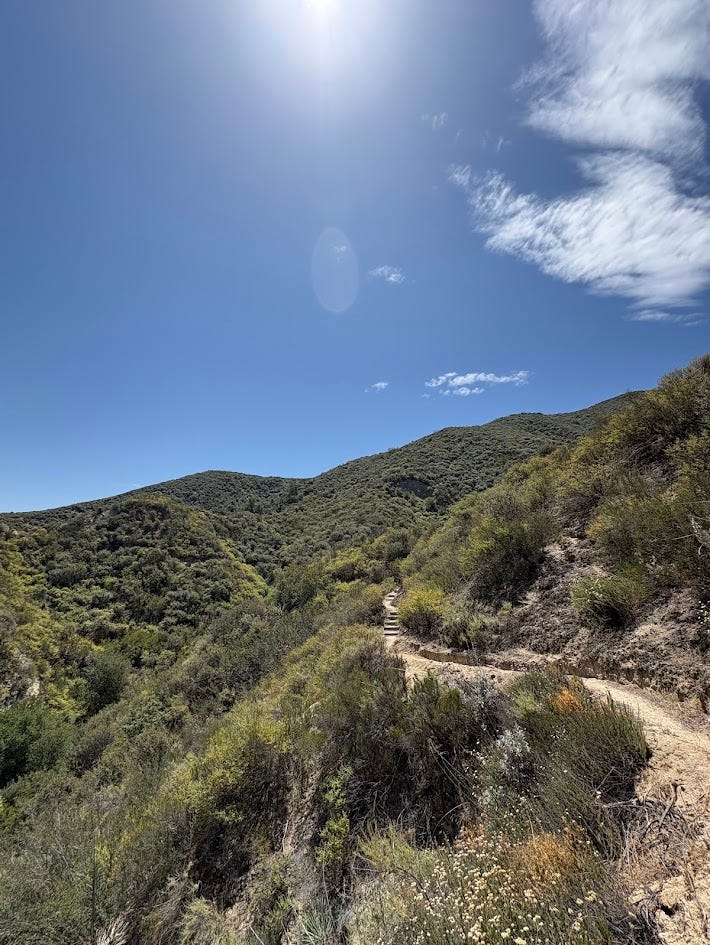
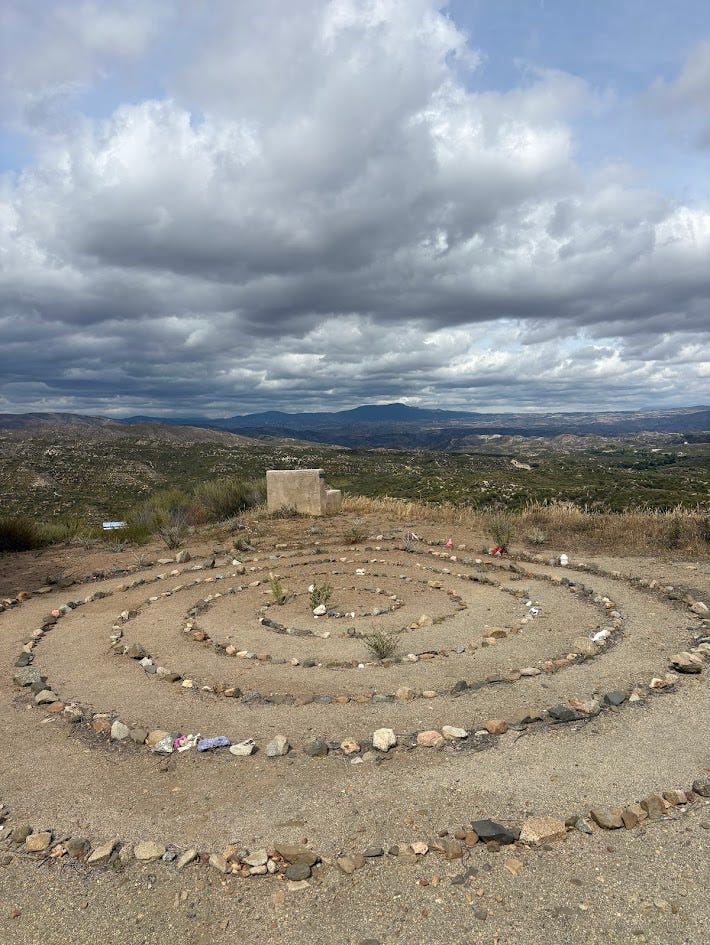
hiking finds at Dorland 1:30-3:30PM: More writing
3:30-4:30PM: Reading time!!!!!!!!!!! (this felt so good after writing all day)
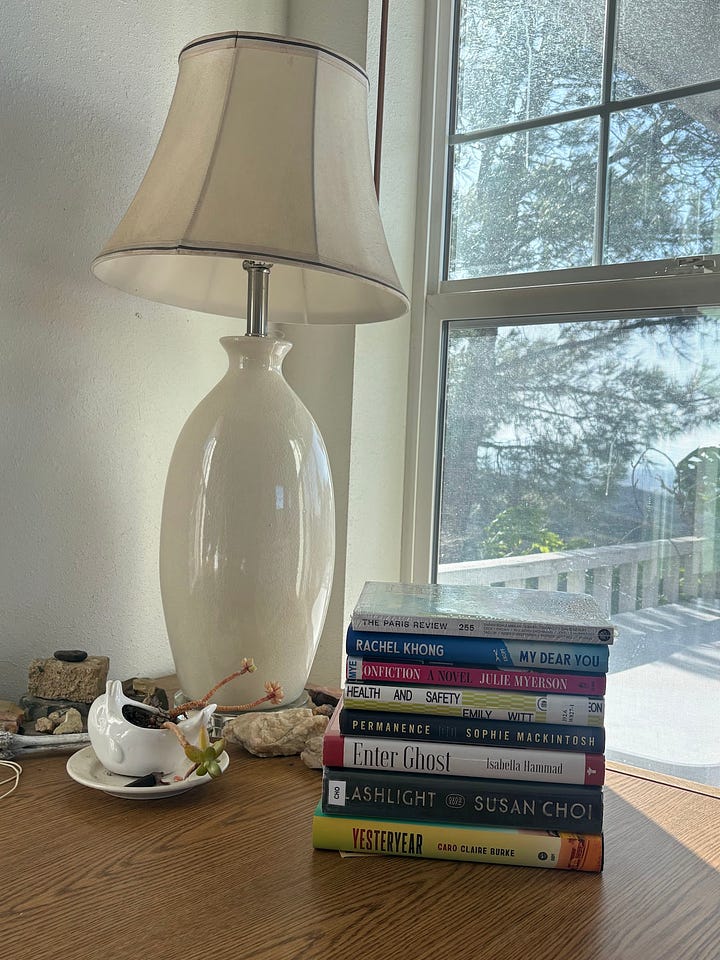
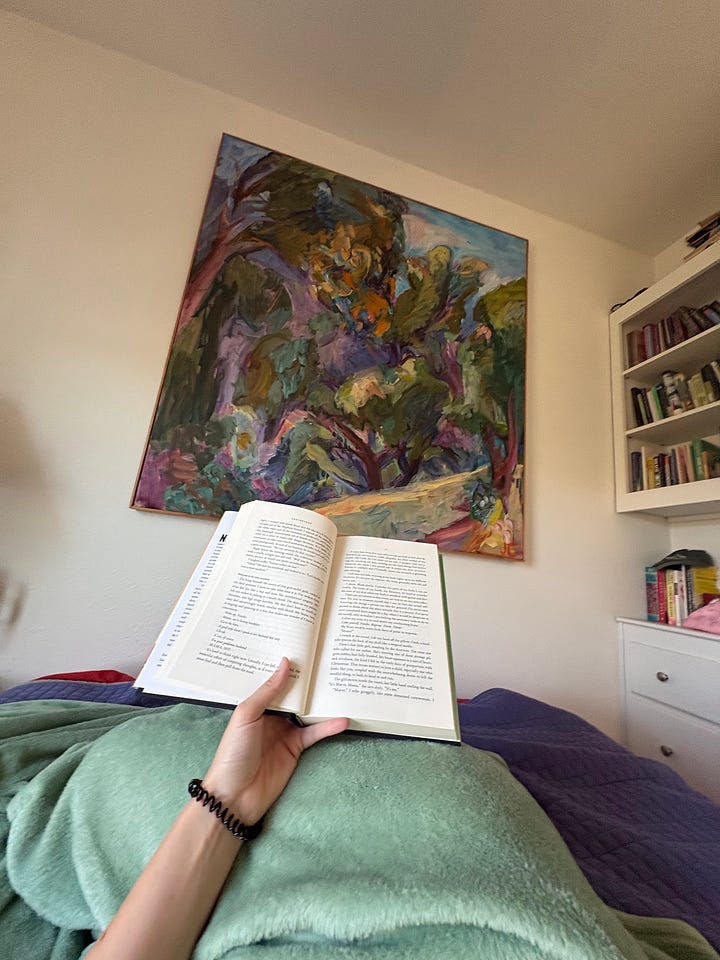
reading :) 4:30-5PM: Cleaning/tidying up the cottage (more on this below because never in my wildest dreams did I think tidying up would need to be tampered down by RULES)
5-6PM: Dinner/Phone call with my husband/family/friends. Again, dinner was typically something easy. When I spoke to my loved ones, I didn’t talk about my book other than saying ‘it’s going great!’ Drafting is such an exploration and it consistently surprises me, which is maybe why I felt so resistant to workshop. I don’t know what the book wants to be yet so I cannot hear other people’s opinions on it!
6-8PM: Write, write, write. Or read, if my writing muscle is done for the day. After witnessing the magic of sunset on Day 1, I decided that I’d pause every single day to watch the sun set on my porch. It felt big and important.
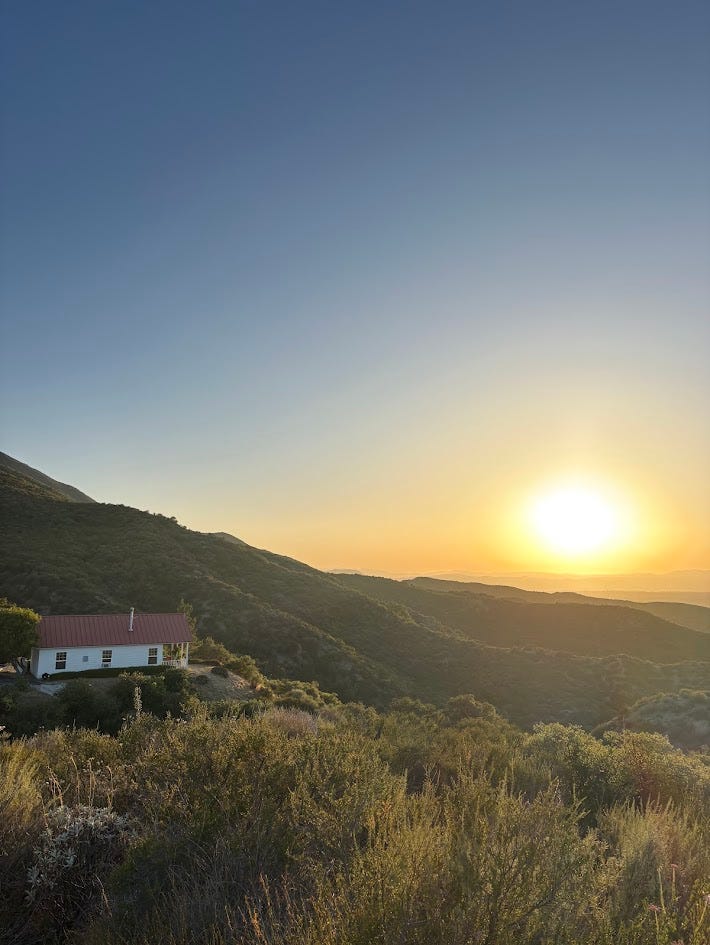
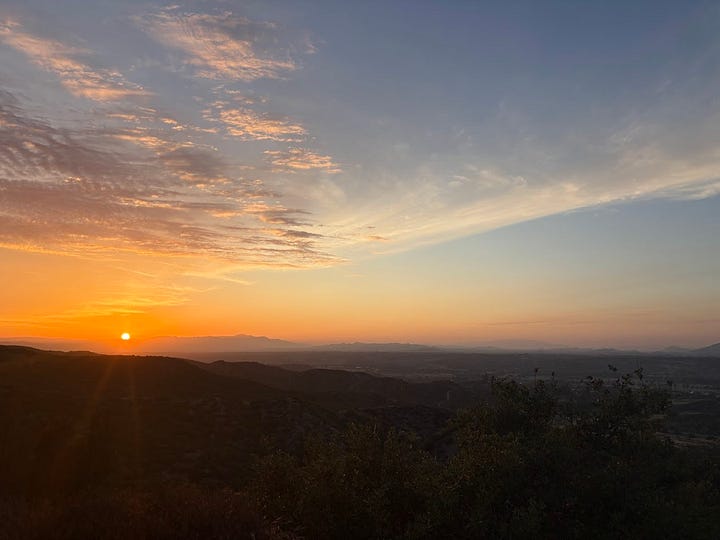
sunset views


8-10PM: These were kind of my no man’s hours tbh. Sometimes I’d write, but not often. I’d light a candle and dance around the cottage to music; I’d take a long shower; I’d read. I thought, going into the week, that I’d somehow, after never being a night writer, transform into someone who wrote through the night. LOL, no. I was consistently asleep by 10:15PM, which is when I normally go to bed.
The amazing thing about Dorland is that nothing is required of you. There are no mandatory social hangs with other artists (although there were two optional events I attended and loved!), and no one’s going to come knocking on your door to make sure you’re working. You don’t have pages due, you’re not accountable to workshop members or faculty. All of that freedom can be a little scary, and on the Sunday of my stay, it did get to me.
I couldn’t get past this one scene. It wasn’t a scene that I anticipated giving me grief; on paper, it seems straightforward, simple, with much lower stakes than other parts of the novel. Nonetheless, it was this one that troubled me. I couldn’t get my characters out of the club they were in and back to their AirBnB— the dialogue felt stilted, off. Something wasn’t landing. I spent most of that day pacing the cottage and the trails nearby, churning through the same questions. I started, by midday, to feel oppressed by all the freedom, and to feel like writing a novel is essentially being in psychosis.
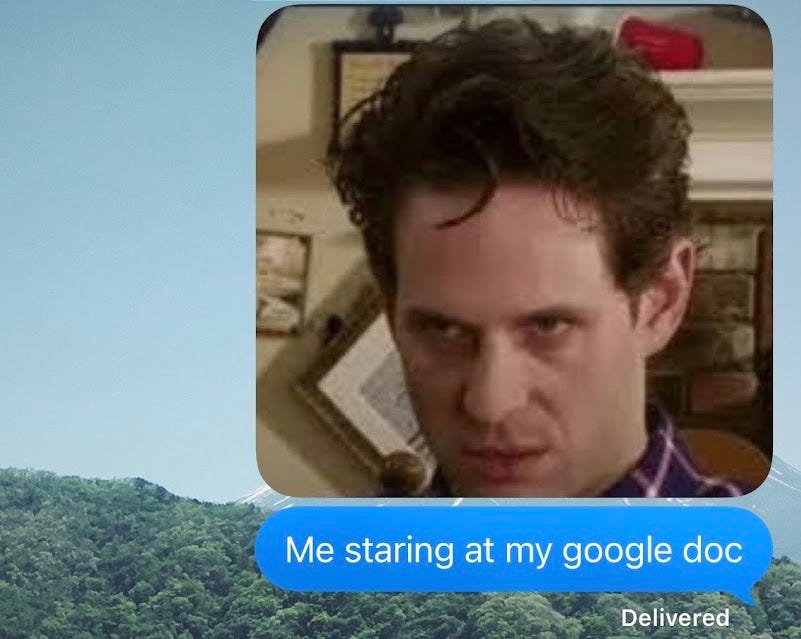
And then, on Monday morning I did something radical: I left the scene where it was, and moved on to a different scene. I abandoned my characters in the club and wrote a flashback scene, one in my protagonist’s childhood at a campground. I literally laughed to myself while writing because what do you MEAN I can… keep writing? That I can put a giant X as a flagpole to come back to and just keep the narrative running? WHAT DO YOU MEAN??? Is that allowed???
That became my first ‘rule’ of residency:
Do not spend more than 5 minutes where you’re stuck if you are stuck. Move on to another scene.
This is hard for me. I’m obsessive compulsive, and generally prefer things to be ordered chronologically. I don’t like the feeling of writing something that happens later in the book earlier than writing things that happen earlier in the book. I can spend literal hours drowning in overwhelm about the massiveness of what I’m doing— creating, from scratch, fully-fledged characters, fully lived lives for them— and then I’m exhausted, unable to see a way through the heavy overwhelm. I found, during this residency, that the less time I spent fretting about what to do, the better. Create a symbol or marker of some kind, add it where you’re stuck, and move the fuck on
There were other ‘rules’ that I developed at Dorland as well. And when I say ‘rules,’ I emphasize the quotation marks around the word. Those quotation marks are like semi-firm pillows maybe. Thinking of these ‘rules’ in this way made me feel less afraid of breaking them. (note that rules #2 and #6 below were ones I held myself more strictly to than the others)
Stop tidying the god damn cottage omfg!!!!!!! Cleaning time is 5PM. You are not allowed
The worst writing habit I have, I realized at Dorland, is that I think I need an absolutely pristine writing space in order to write. Guess what? That obsessive level of rigidity is just a distraction! I started realizing how many times I’d get up from my writing chair to wash a coffee cup or put away shoes or fluff a pillow. Or or or. Things always need cleaned, things always need tidied. And the more I got up to scratch these itches, the more I’d find other things that I could clean/tidy. Before long I’d have been cleaning for forty minutes and was totally out of the flow of what I was writing. Having an allotted time for cleaning helped so much.
Give your brain auditory variation.
I alternated between silence, music, and The Fountain (Chelsea Bieker Kimberly King Parsons) frequencies while writing at Dorland. When one started to grate or bore me, I’d switch to another. I noticed that my brain would drift if it started growing bored of what I was listening to, so these alternating options helped.
Allow your body to tell you what it wants food wise. If you’re not hungry, don’t cook a meal. Eat a PB&J and don’t feel guilty about it.
Once I removed the 'what am I going to cook for myself’ question from my days, I felt unblocked. Normally I eat breakfast, lunch, and dinner, but at Dorland I started to eat a small breakfast, a large 3PM meal, and a small dinner or even a snack. Most of the time it was something easy (a lot of Trader Joe’s frozens) and sometimes it was something ‘bad’ but comforting (again, a topic for another post is the concept of ‘bad food’). This really allowed me to take a step back from my eating habits and give myself what I needed in this moment.
Move frequently and with whimsy.
The amount of dancing I did in that cottage… to an audience of rabbits and lizards and birds… I’d stretch often, too, long forward folds and frequent downward dogs. Once, after returning to my cottage from an errand, I felt so excited and happy that I was here, in this space, doing this, that I let myself roll down the hill (I hope no one saw but if they did I hope they laughed). Watching the critters of the mountain scuttle and play together moved me, and I felt an urge to emulate the natural way they let their bodies be in motion.
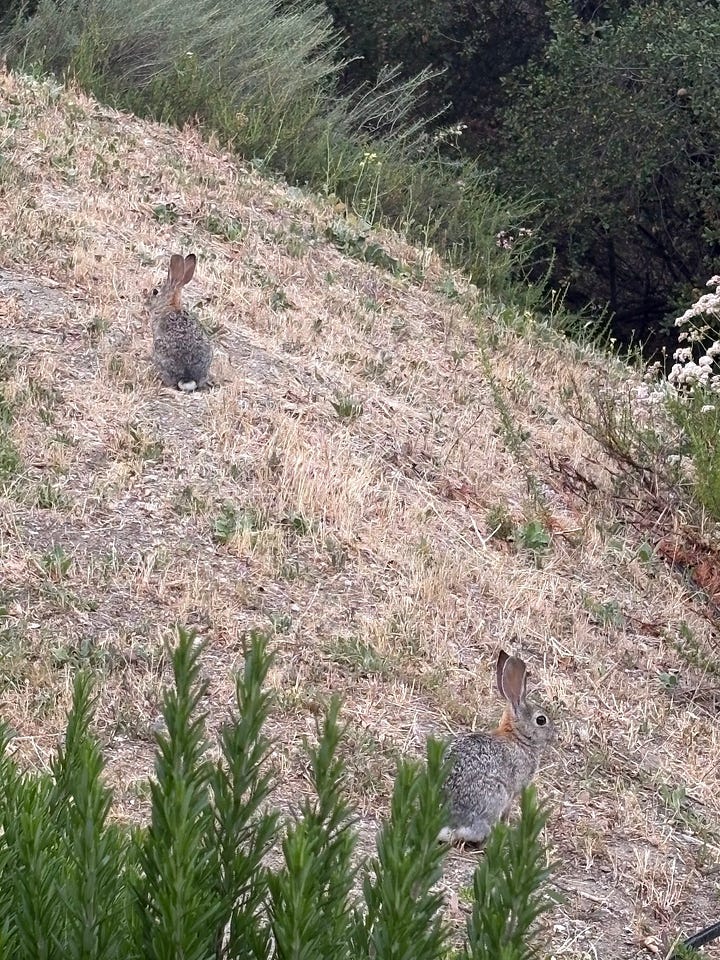
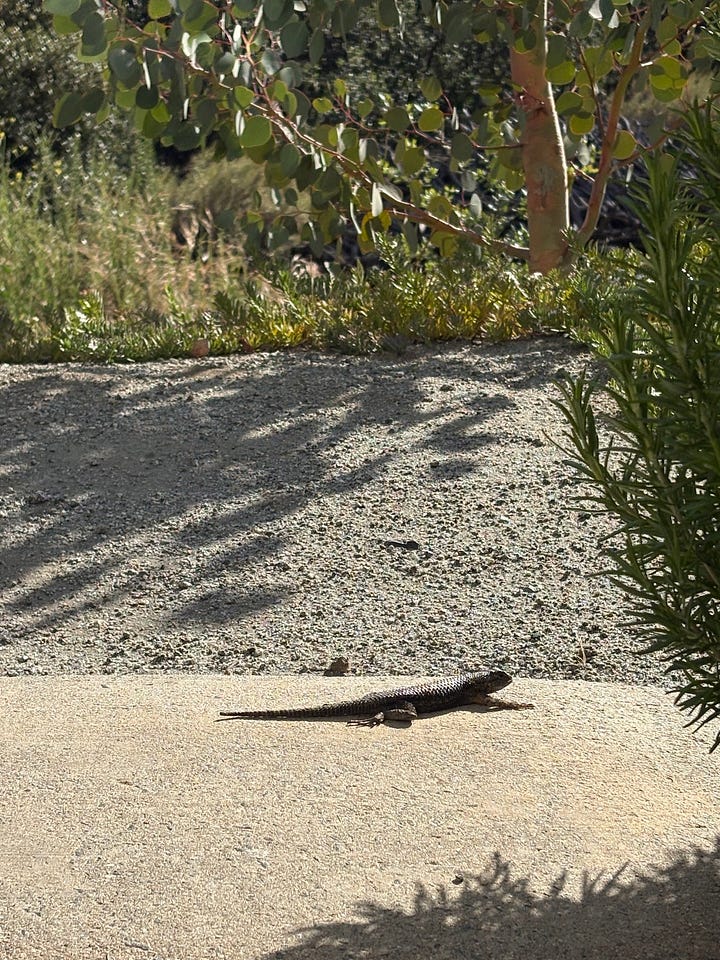
cottage friends
Don’t read your shitty first draft until after you’ve written THE END on the last page. Drafting Erika has her job, Editing Erika has hers; drafting Erika doesn’t have the right credentials to edit, and editing Erika doesn’t have the right credentials to draft.
Oh my God, I’ve needed this rule my entire writing life. I kind of learned this the hard way when writing my memoir, but for this novel I’ve had to abide by it more than ever before. I’ll just say it clearly again for myself: you cannot properly edit something that is half baked. It’s simply not ready for edits. And that’s why, before attending Dorland, I’d written about 25K words; not bad, definitely not nothing, but limited because I kept tinkering with the first 5K words over and over again. I realized that in fiction especially, the drafting process surprises you, takes the narrative somewhere you didn’t expect, maybe multiple unexpected places. I think holding too fast to this idea of the ‘perfect’ chapter or scene prohibits those surprises from fully coming through. We, as writers, have to believe that there’s something bigger with us when we write, spiritual almost, and sometimes we just have to trust whichever shady path we’re being led down. There were moments where this was difficult. I’ll use an example: I forgot what I named my protagonist’s mother in an earlier chapter and needed the mother in a later chapter. Instead of digging back through earlier chapters to find the original name, which I felt a strong impulse to do— an act that I KNEW would lead me to rereading and nonstop editing— I intentionally decided to name the character something else (maybe it’s the same name I still don’t know lol) and kept the train moving. Now, this may seem small and silly, and it is, but that decision, one I kept making during my residency, enabled me to get as much done as I did. I 100% believe that the only reason I was able to double my novel’s word count while at Dorland was because I followed this rule. Editing Erika needs a job to do once Drafting Erika has finished hers! I genuinely don’t know what the hell has happened in parts of my book right now, and I’m not only okay with that, I’m enjoying it. It’s adding to the ~vibes~ of the chaotic scenes I’m writing.


I am incredibly grateful to have been recognized and supported by Dorland. This space is special, and I felt empowered while there, supercharged by all of the creation I knew had happened in that cottage before me (finding Edan Lepucki ‘s notes, a writer I’ve admired for years, was a real treat!). Already I long for my favorite time of day in Markham, 4:30PM, the light cartwheeling through the windows just right, the birds calm, and the words, my words, meaning something. Meaning everything.


Love this ❤️ need to remind myself to not look back!!
an ideal daily schedule